
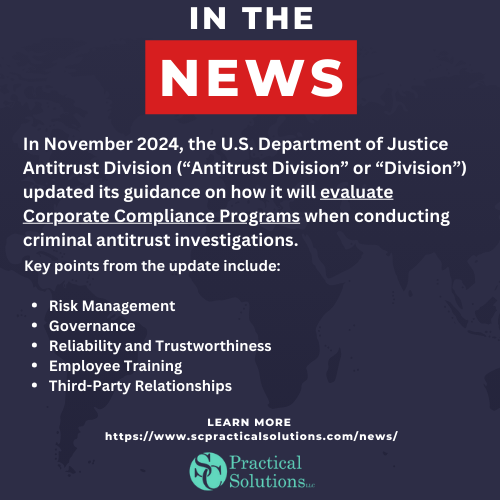
 The Department of Justice (DOJ) has recently updated its Evaluation of Corporate Compliance Programs (ECCP) to address the use of artificial intelligence (AI) in compliance programs. This update, released on September 23, 2024, emphasizes the importance of integrating AI responsibly and effectively into compliance frameworks.
Key points from the update include:
The DOJ’s guidance ensures companies proactively manage AI-related risks and maintain effective compliance programs.
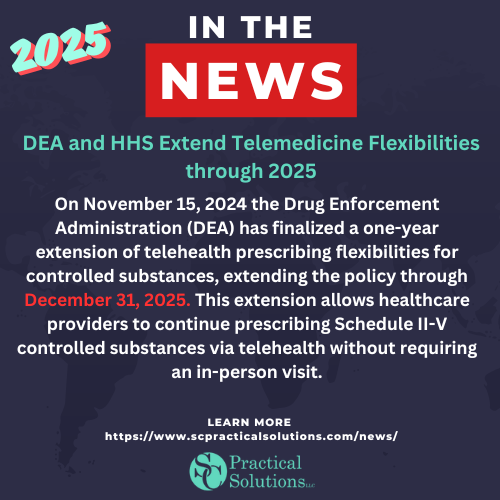
The Drug Enforcement Administration (DEA) has finalized a one-year extension of telehealth prescribing flexibilities for controlled substances, extending the policy through December 31, 2025. This extension allows healthcare providers to continue prescribing Schedule II-V controlled substances via telehealth without requiring an in-person visit. The decision was made in response to the ongoing need for accessible healthcare and to ensure a smooth transition for patients and providers who have come to rely on telehealth services.
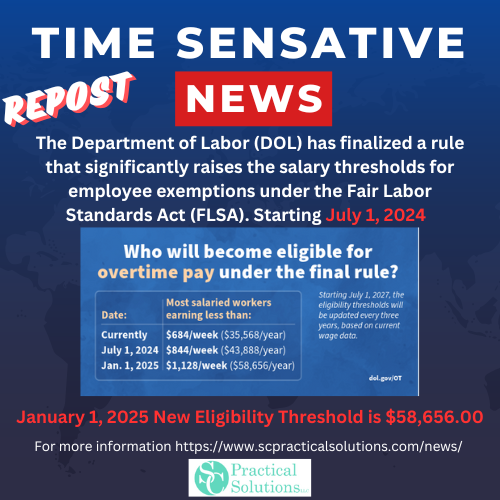
Starting January 1, 2025, the U.S. Department of Labor will implement new overtime rules to ensure fair compensation for employees working more than 40 hours per week. These rules significantly change salary thresholds and expand overtime protections.
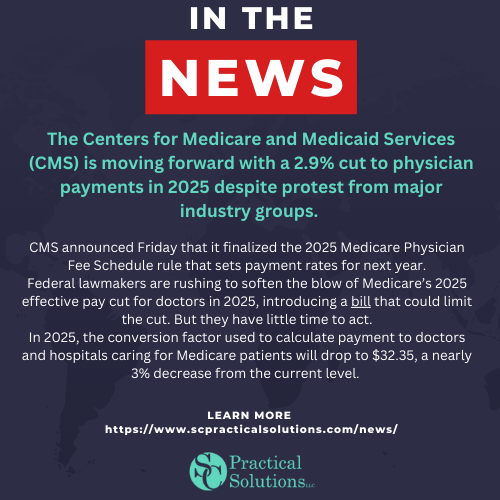
The Centers for Medicare and Medicaid Services (CMS) has finalized a 2.9% cut to physician payments for 2025.
Here are the key points:
Payment Reduction: The cut is part of the Medicare Physician Fee Schedule rule for 2025, resulting in a conversion factor of $32.35, down from $33.29 in 2024.
Reasons for the Cut: The reduction includes the expiration of a temporary 2.93% increase for 2024 and adjustments for changes in work relative value units for certain services.
Industry Reaction: Major physician groups, including the American Medical Association, have expressed strong opposition, citing financial strain on medical practices and potential impacts on patient care.
Congressional Response: When Congress reconvenes, lobbying efforts are expected to stop or mitigate the cut.
This decision has sparked significant debate, with healthcare providers concerned about the sustainability of their practices, especially in rural and underserved areas.
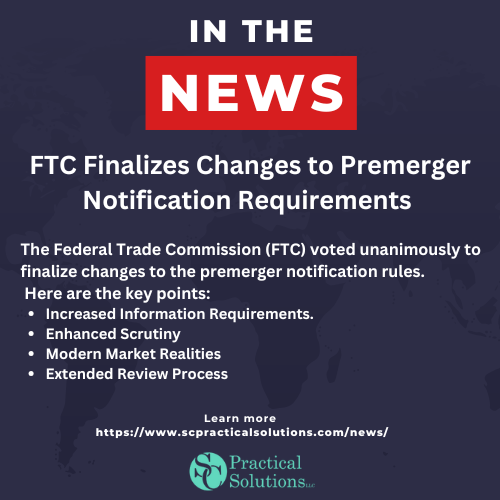 The Federal Trade Commission (FTC) Finalizes Changes to Premerger Notification Form
The Federal Trade Commission voted unanimously to finalize changes to the premerger notification form and associated instructions and the premerger notification rules implementing the Hart-Scott-Rodino (HSR) Act.
The final rule implements changes that will improve the ability of the FTC and the Antitrust Division of the U.S. Department of Justice (DOJ) to detect illegal mergers and acquisitions before consummation. The rule requires additional information to determine which deals require an in-depth antitrust investigation, including through the issuance of Second Requests.
Here are the key points:
These changes are part of a comprehensive overhaul of the premerger notification program under the Hart-Scott-Rodino Antitrust Improvements. The goal is to ensure that regulatory agencies can better assess the competitive effects of proposed mergers and acquisitions.