

The significant drop in out-of-hospital cardiac arrest (OHCA) survival rates during cyber attacks can be attributed to several critical factors:
These factors combined can drastically reduce the chances of survival for individuals experiencing cardiac arrest outside of a hospital setting.
Telehealth is generally considered rendered at the patient’s location, and typically, individual states will require providers delivering care to patients within their borders to have a license issued by the state or some type of in-state approval. Nevertheless, some states have adopted limited licensure exemptions as well as alternatives to full in-state licensure for out-of-state telehealth providers. Many states have also adopted interstate licensure compacts that provide an additional means of approval to practice via telehealth across certain state lines.
LEARN MORE – CCHP JULY 9, 2024
LEARN MORE – CCHP JULY 16, 2024
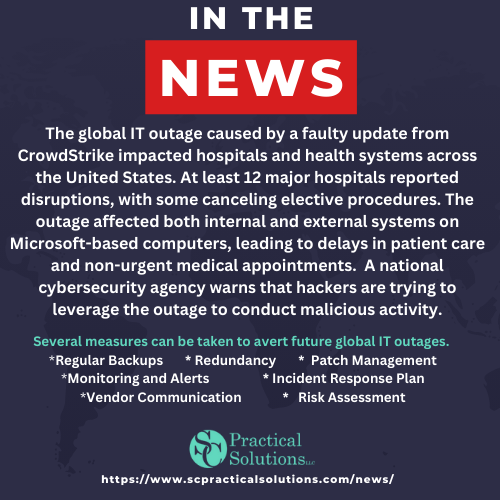
The global IT outage caused by a faulty update from CrowdStrike impacted hospitals and health systems across the United States. At least 12 major hospitals reported disruptions, with some canceling elective procedures. The outage affected both internal and external systems on Microsoft-based computers, leading to delays in patient care and non-urgent medical appointments. Hospitals like Cleveland Clinic, Mass General, and Nationwide Children’s Hospital were among those affected. A national cybersecurity agency warns that hackers are trying to leverage the outage to conduct malicious activity.
To prevent future global IT outages, organizations can take several measures:
LEARN MORE – FIERCE HEALTHCARE
LEARN MORE – American HOSPITAL ASSOCIATION
Physicians are currently facing a 2.8% cut in pay under the proposed 2025 Medicare physician payment schedule. This proposal from the Centers for Medicare & Medicaid Services (CMS) follows a 1.69% Medicare pay cut in 2024 and a 2% drop in 2023.
On July 10, 2024, the Centers for Medicare & Medicaid Services (CMS) issued a proposed rule that announces and solicits public comments on proposed policy changes for Medicare payments under the Physician Fee Schedule (PFS), and other Medicare Part B issues, effective on or after January 1, 2025.
The calendar year (CY) 2025 PFS proposed rule is one of several proposed rules that reflect a broader Administration-wide strategy to create a more equitable healthcare system that results in better accessibility, quality, affordability, empowerment, and innovation for all Medicare beneficiaries.
LEARN MORE – FIERCE HEALTHCARE
The future of a Federal Trade Commission ban on noncompete agreements, scheduled to take effect this fall, is unclear after a preliminary ruling from a federal court last week.
Nearly 1 in 5 Americans, an estimated 30 million people, are subject to a noncompete agreement, according to the FTC. The agreements prevent workers from taking a new job with competitors or starting a new business in the same industry.